
Case Study – VSEP for Fish Manure and Offal
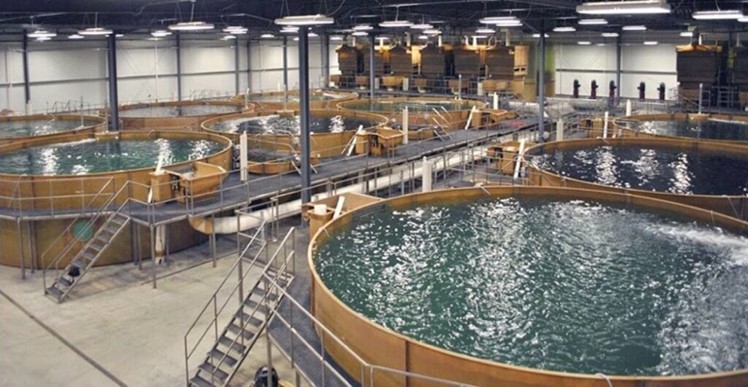
Aquaculture, or fish farming, has grown substantially in recent years. With technology advancements, commercial fishing in the wild has become extremely efficient and this has put a strain on fish populations in certain areas. Fish capture by commercial vessels will not be able to keep up with worldwide demand. Annual consumption of seafood has doubled in the last three decades. Captively raised fish now account for about 25% of the world’s supply and this is expected to grow to 50%. In addition to serving a need for sustainable supplies, fish farming is essentially an economic development run by small and medium sized businesses in remote areas where alternative employment is limited. This is the case with Atlantic salmon production in Scotland, Norway and Ireland. This overall trend has grown because of a general decline in catchable wild fish stocks and an increase in public demand for finfish and shellfish resources.
Captive fish production can generate considerable amounts of effluent. This wastewater can contain feces, medications, bacteria, viruses, pesticides, and other potentially harmful pollutants. Fish farm effluent is often discharged directly into shallow coastal habitats. Limits on pollutant loads from aquatic animal production facilities are increasing. The US Environmental Protection Agency is currently developing national effluent quality criteria for the US aquaculture community. VSEP has been used to treat pig, cow, mink, duck, chicken, shrimp, and fish manure. Fish farming on land is done in large tanks. To keep a healthy water quality, 20% of the water must be changed on a regular basis. Filtration is used continuously to remove suspended solids, but this alone is not enough to keep the water clean.
Once the fish are raised and ready for sale, the meat processing begins and this also generates a large amount of effluent. This effluent can contain some valuable byproducts when concentrated such as oil and parts of the fish that can be sold as fish meal, a farm animal feed product high in protein. Fish meal can be sold for about $500/ton. Extracting the organic materials from fish processing effluent can have economic benefit as well as making clean water for reuse or safe discharge.
Stick Water Protein Separation
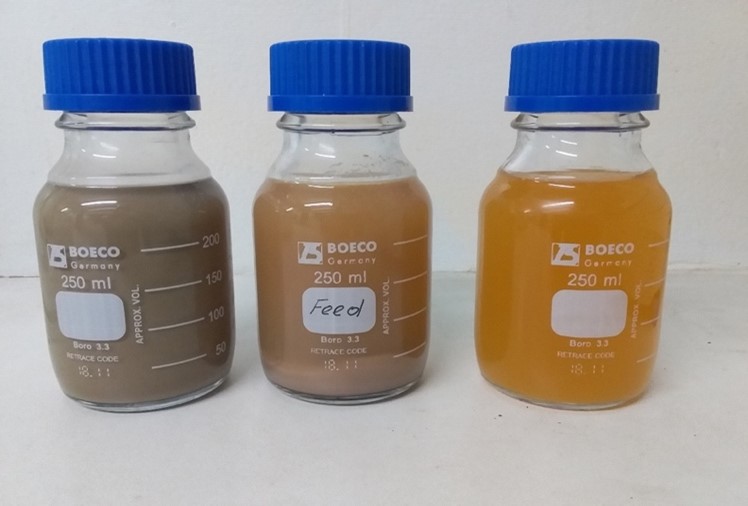
We did some test work for a Peruvian fish processing company. They use Anchovy to make a fish meal product that can be sold as a farm animal feed. During the processing, they would use an evaporator to concentrate and dry the stick water, or liquid waste left from processing. This water contains a lot of proteins and also large organic suspended solids. These large solids cause problems for the evaporator. So our work involved using a Teflon Microfilter to separate the large solids and produce a clean protein water that could feed the evaporator. Proteins and organics of this kind would normally foul conventional crossflow membranes just as it did to the evaporator. The VSEP was able to efficiently filter this was with a flux rate of 42 GFD.
Seafood Tank Filtration
A company in Minnesota raises shrimp in indoor tanks. They wanted to improve the water quality in the tanks and to minimize the waste generated. Typical methods of protein skimmers and coarse filtration has limits when it comes to water quality. We studied the idea of using a tight UF membrane with a molecular weight cut off of 5,000 Daltons. This would be a much finer filtration media and would produce much cleaner water if the VSEP was installed like a kidney and would remove particulates and proteins from the tank water. The VSEP performed well with a flux rate of 30 GFD and 98% recovery.
